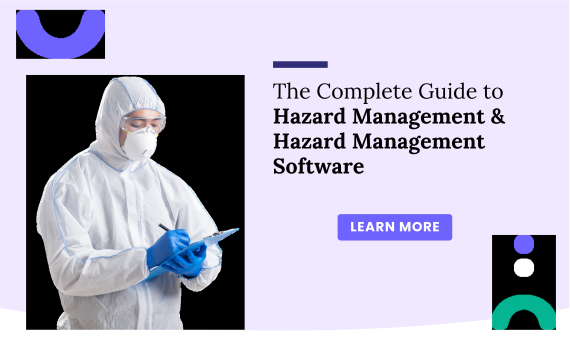
What hazard management is
Hazard management is the disciplined process of identifying anything in the workplace that could cause harm, assessing how serious the risk is, and putting controls in place to eliminate or reduce it. Done well, it is proactive: it finds and fixes problems before they cause an incident rather than investigating them afterward.
Every effective safety program rests on this foundation. You cannot control what you have not identified, and you cannot prioritize what you have not assessed.
The key steps of hazard management
Hazard management follows a clear, repeatable cycle. Software makes each step faster and ensures nothing falls through the cracks between them.
- Identify hazards through inspections, observations, and frontline reporting.
- Assess each hazard's likelihood and severity to rank what needs attention first.
- Control the risk using the hierarchy of controls — eliminate, substitute, engineer, administer, then PPE.
- Implement and assign controls with clear owners and deadlines.
- Monitor and review to confirm controls are working and adjust as conditions change.
Industry risks vary — your process should not
A warehouse, a manufacturing line, and a construction site face very different hazards: forklifts and racking in one, moving machinery and noise in another, falls and energized equipment in the third. The specific risks change, but the management process is the same everywhere. A consistent process applied across sites is what lets leadership compare risk fairly and direct resources where they matter most.
How hazard management software helps
Paper-based hazard programs struggle because the data sits still. A hazard noted on a clipboard rarely becomes an assigned, tracked, and verified control. Software closes that loop automatically.
When a worker reports a hazard from their phone, the platform can score the risk, route it to the right owner, generate a corrective action, and keep escalating until it is resolved and verified. Leadership sees open hazards by severity in real time, and the full history is preserved for audits and investigations.
- Mobile reporting that captures hazards with photos at the point of work.
- Automated risk scoring and prioritization.
- Corrective actions with owners, due dates, and verification steps.
- Trend dashboards that reveal recurring hazards before they cause injuries.
Building a culture, not just a checklist
The most powerful outcome of good hazard management software is cultural. When reporting a hazard is easy and workers see that their reports lead to real fixes, participation rises and the organization starts catching problems far earlier. The software is the mechanism; the culture of proactive safety is the payoff.